

Worth remembering?
Worth remembering?
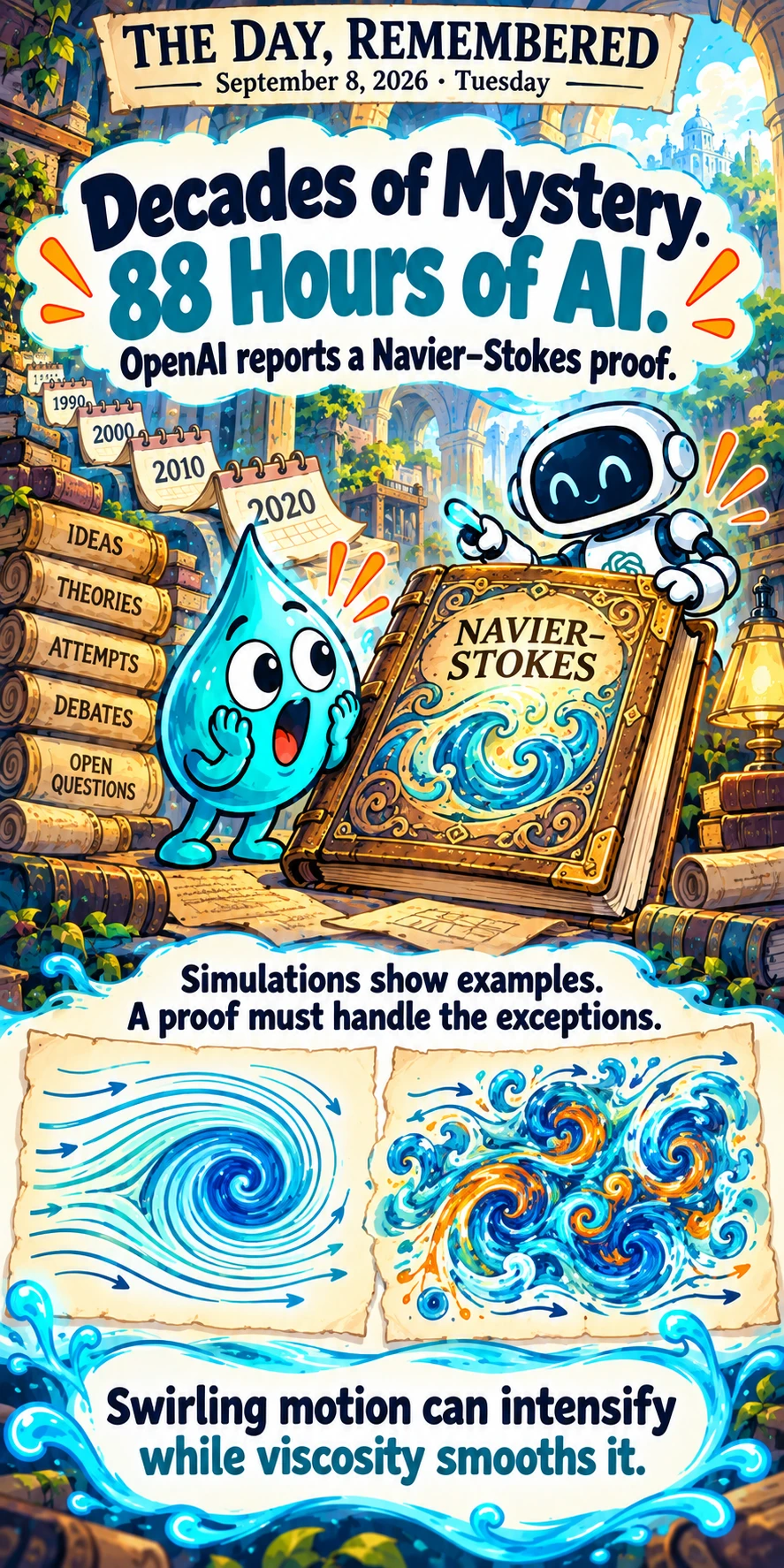
On September 8, OpenAI published a proposed Navier–Stokes proof. These equations describe fluid motion, but showing whether smooth three-dimensional motion can break down resisted mathematicians for decades. Simulations test examples; a proof must establish its claims without hidden exceptions. The challenge is controlling intensifying motion despite viscosity’s smoothing effect.
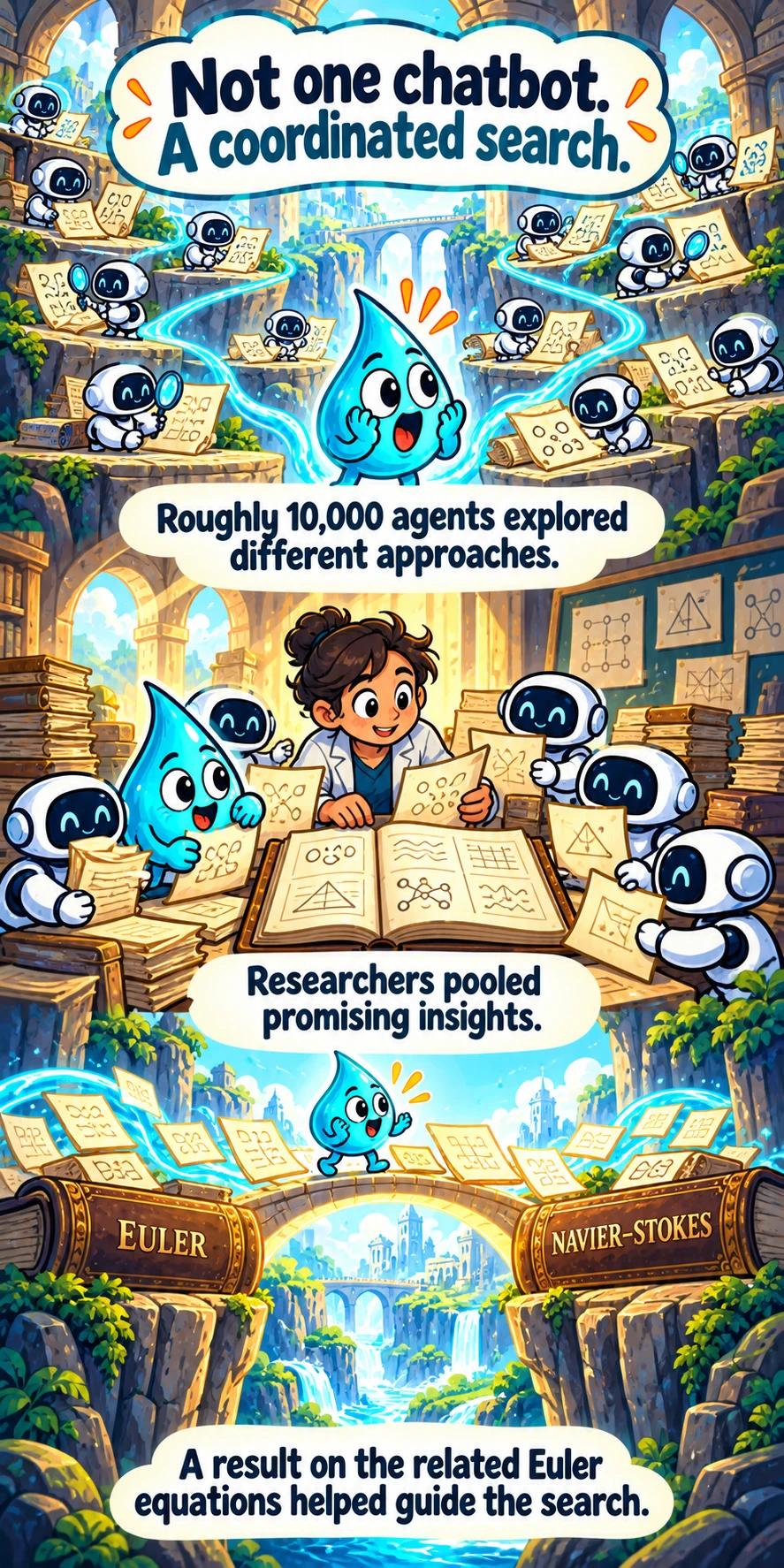
OpenAI reports roughly 10,000 concurrent agents exploring different approaches, using tools and sharing intermediate results. Researchers consolidated promising insights. A result on the related Euler equations helped guide the search. The distinctive workflow was coordinated exploration and recombination—not one chatbot producing an answer in a single response.
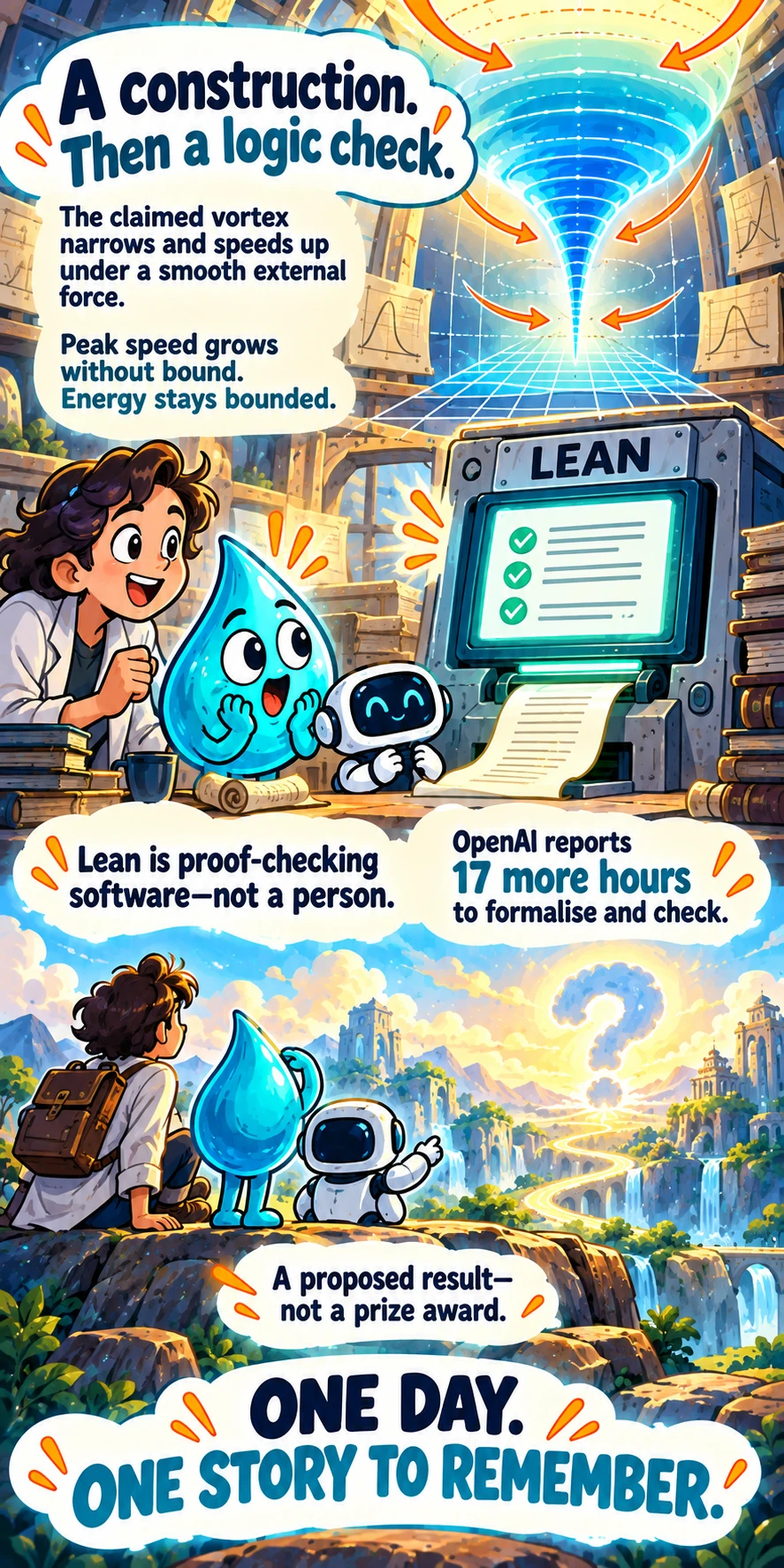
The claimed construction uses a smooth external force and a narrowing vortex: peak speed grows without bound while energy stays bounded. This is a mathematical model’s breakdown, not real water moving infinitely fast. OpenAI reports 88 hours to its resolution and another 17 for formalisation and checking. Lean is software that checks encoded logical steps. This is a proposed result, not a prize award or a controlled demonstration that AI universally outperforms human mathematicians. Faster discovery through people, AI and formal verification is the possibility—not a settled conclusion.
Worth remembering?
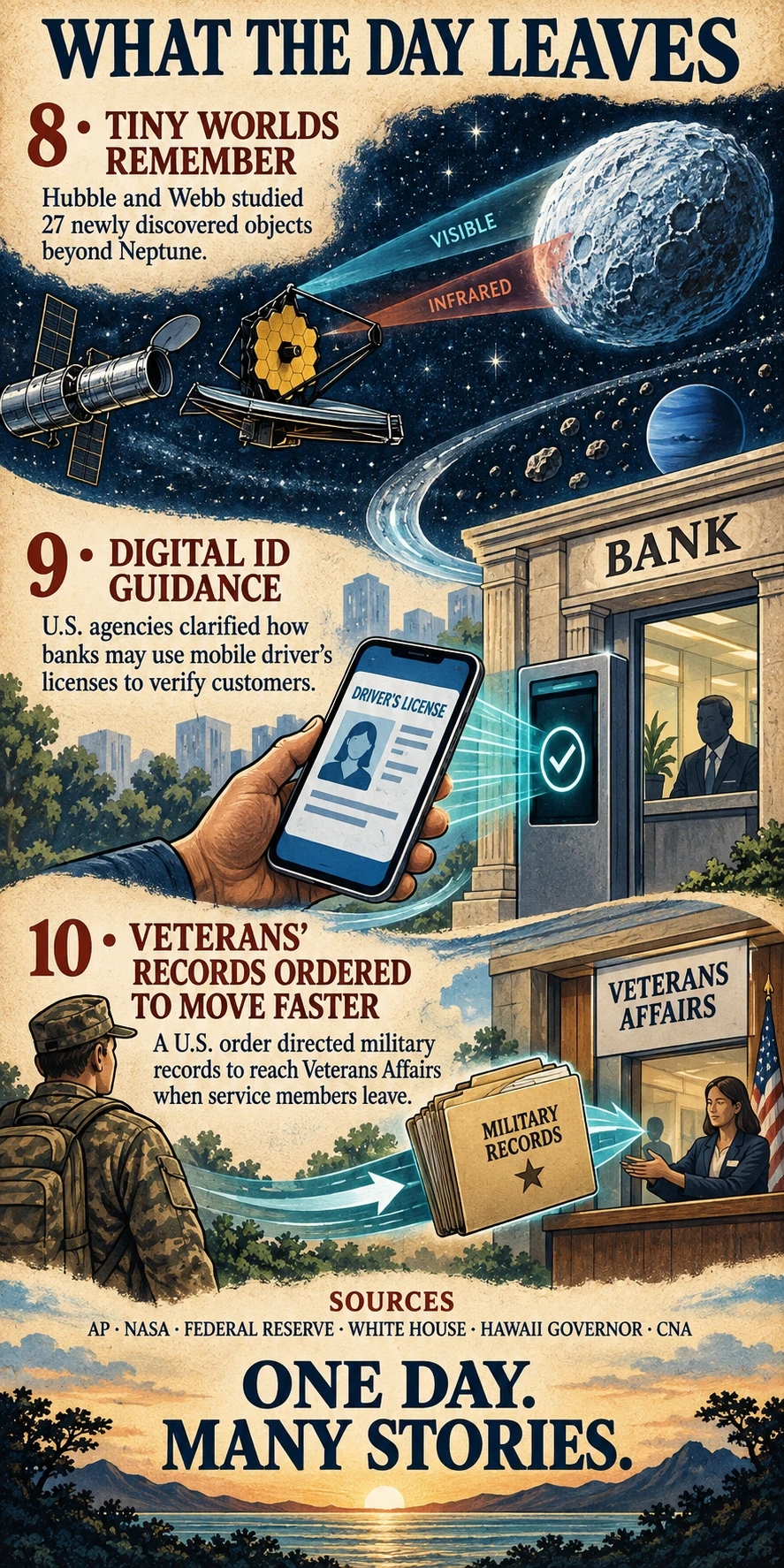
Twenty-seven newly discovered icy worlds offer clues to how planets formed—and how much of that history survives.
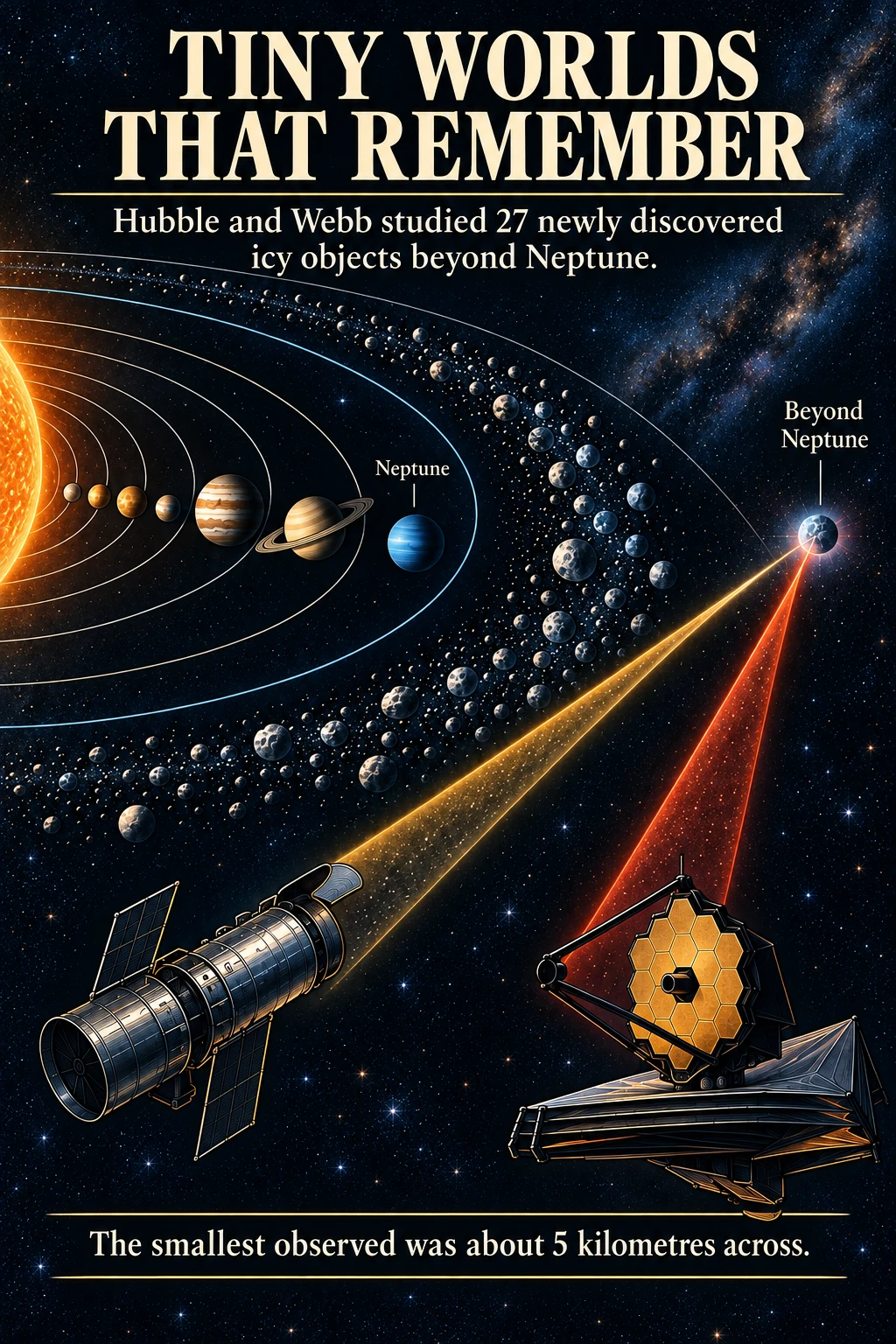
Hubble’s visible-light observations and Webb’s infrared measurements reveal clues to these distant objects’ surfaces. These trans-Neptunian objects are remnants of planet-building; the smallest observed was about five kilometres across.
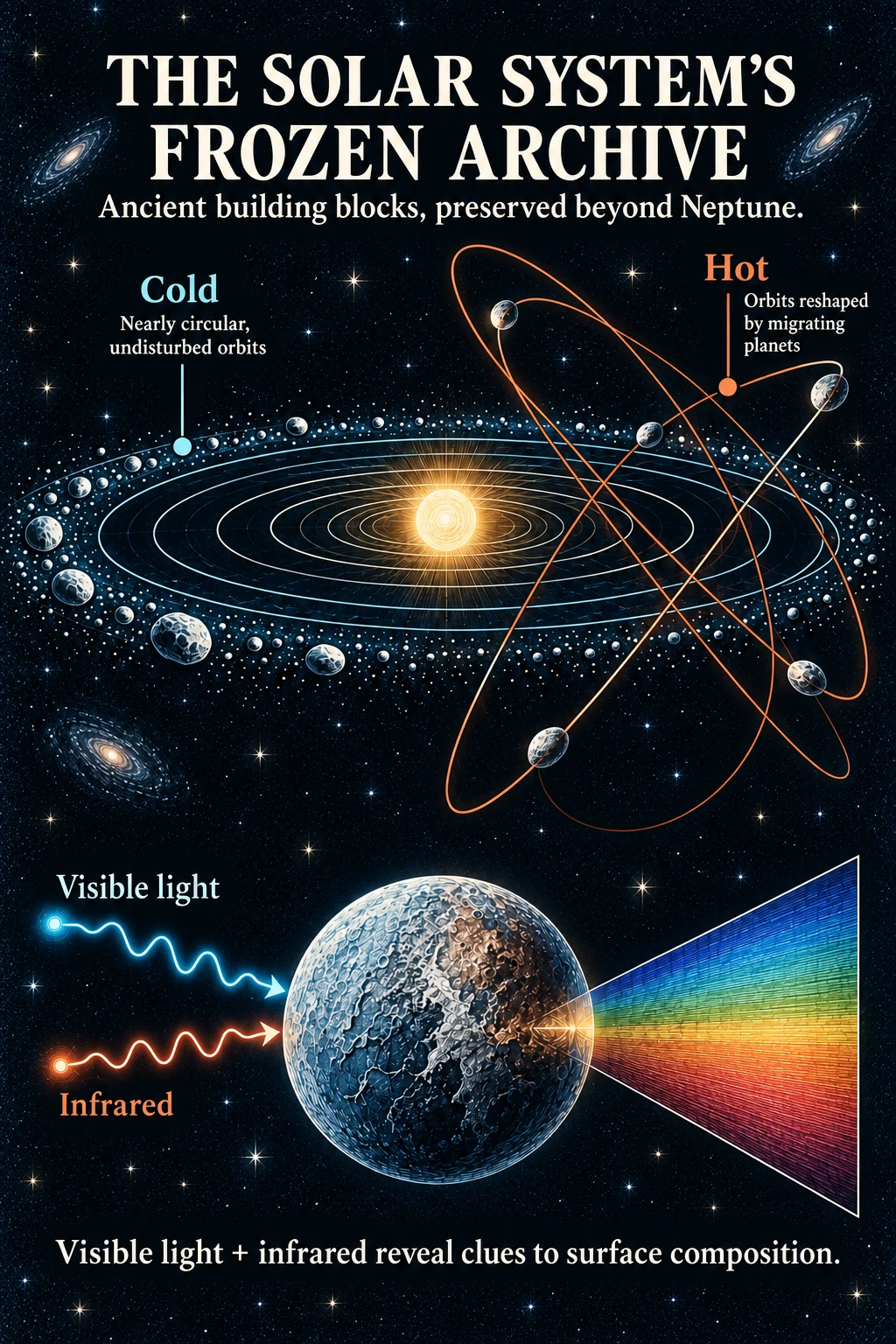
The small worlds resemble their larger relatives in colour, despite expectations that collisions would change their surfaces. “Hot” and “cold” describe their orbits, not their temperatures. Their shared signatures may preserve clues to where they formed.
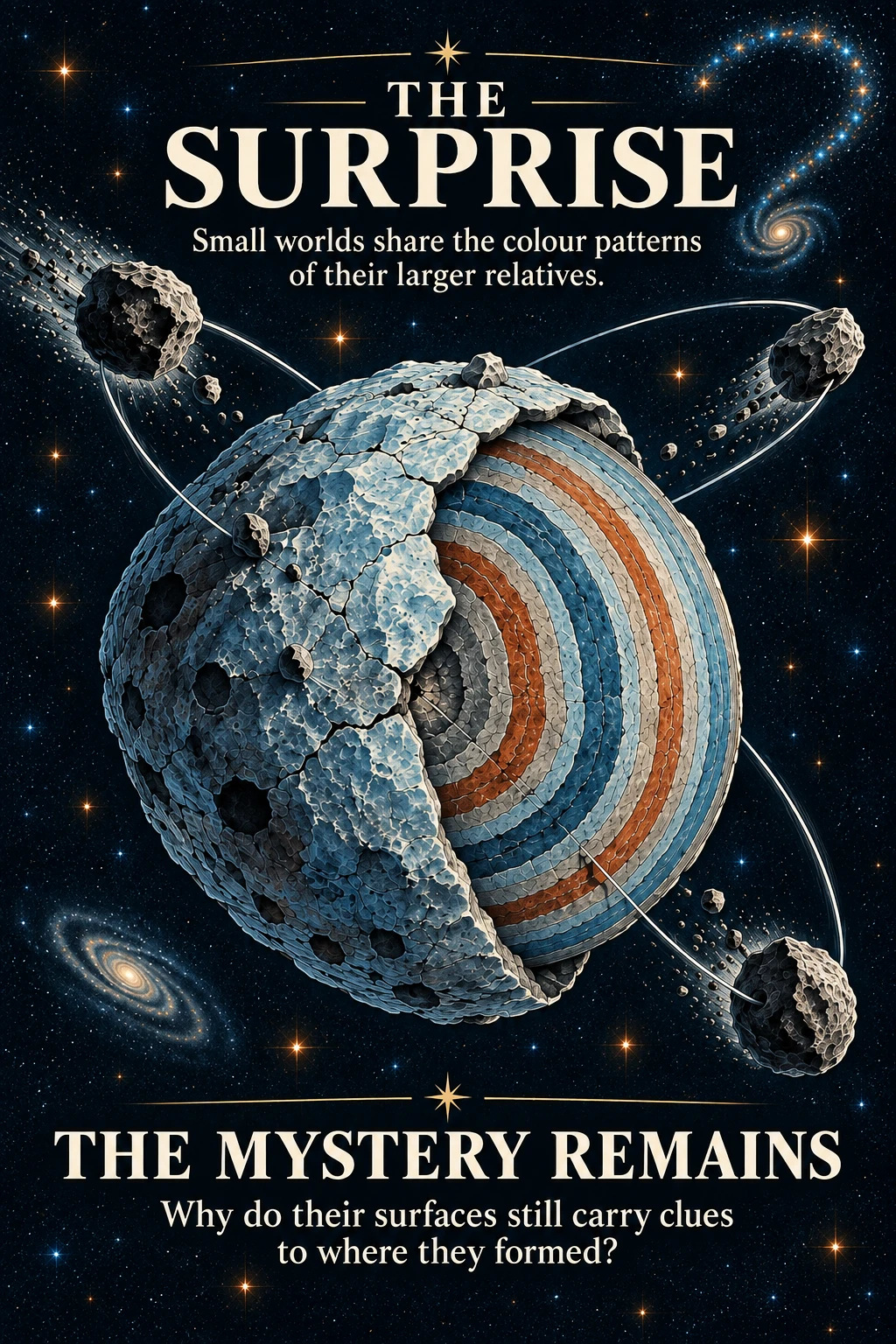
Researchers also found fewer tiny bodies than some models predicted. Together, their numbers and colours help test how planets began. Why these small worlds retain their signatures remains an open question.
Worth remembering?


Worth remembering?